Via dell'Amore Tickets: Booking, Prices & Opening Hours
Book Via dell'Amore tickets for Cinque Terre's famous coastal walk. Timed-entry pricing, official booking steps, opening hours, and what to expect.
9 min read · 7 Oct 2026
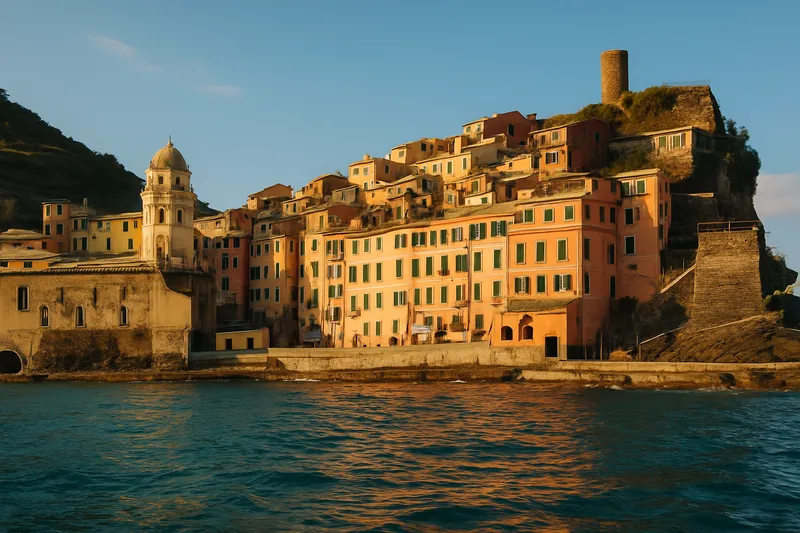
The Five Villages of Cinque Terre
Discover the five villages of Cinque Terre: Monterosso, Vernazza, Corniglia, Manarola, and Riomaggiore. Complete guide to visiting this UNESCO site.
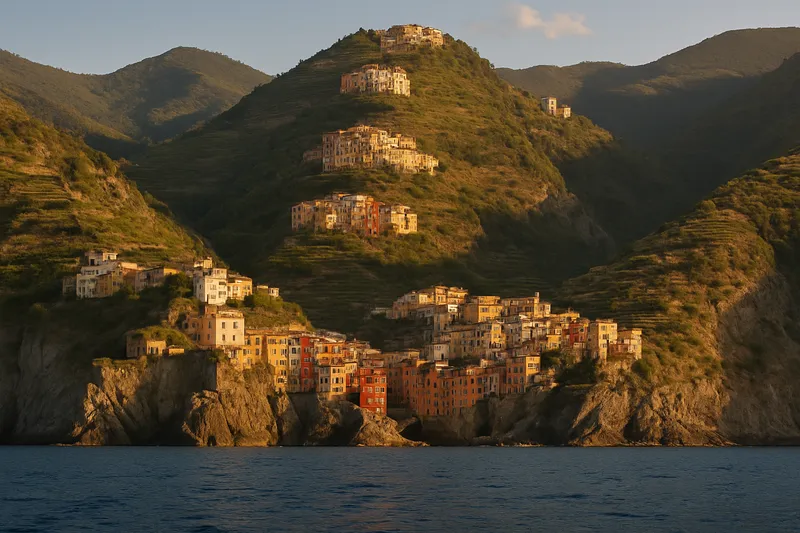
The five villages of Cinque Terre — Monterosso al Mare, Vernazza, Corniglia, Manarola, and Riomaggiore — sit along a rugged stretch of the Italian Riviera in Liguria, roughly 90 minutes by train from Genoa and about 15 minutes from La Spezia. "Cinque Terre" literally means "five lands," and that's exactly what these places were for centuries: isolated fishing and farming hamlets connected mostly by footpaths and boats rather than roads.
What makes this stretch of coast different from, say, the Amalfi Coast isn't scale — it's compression. You could walk from one end to the other in a single long day if the trails were fully open and you were reasonably fit. Amalfi's towns are spread along a much longer, car-dependent road; Cinque Terre's villages are stacked closer together and built specifically to be car-free at their cores. That's a genuine advantage for anyone tired of coastal driving on narrow Italian roads with hairpin turns and no guardrails.
I'd argue the compact size is both the appeal and the catch. Because everything is close together, tour groups can — and do — hit all five villages in one day, which means Manarola's viewpoint or Vernazza's harbor can feel like a train platform at rush hour by midday in summer. If you want the experience without the crush, you need to plan around that reality rather than ignore it.
UNESCO inscribed Cinque Terre, along with Portovenere and the three small islands nearby, as a World Heritage Site in 1997, recognizing the terraced vineyards, dry-stone walls, and centuries-old village layouts as a rare example of harmonious human interaction with a difficult landscape. The listing covers roughly 4,000 acres of protected terrain, most of it now managed as the Cinque Terre National Park — Italy's smallest national park by area but one of its most visited per square mile.
That protected status matters practically: it's why you pay a trail fee to hike between villages, why new construction is essentially frozen, and why the villages still look the way they did decades ago rather than sprouting hotel towers like parts of the Amalfi Coast have.
The villages run northwest to southeast: Monterosso, Vernazza, Corniglia, Manarola, then Riomaggiore closest to La Spezia. A single train line strings them together, with rides between adjacent stops taking just 2 to 5 minutes. There is no direct road connecting all five — cars are banned or heavily restricted within each village center, and the one road that does exist loops far inland through the hills.
That means your practical options are the train, boats in summer (weather permitting), or your own two feet on the trail network. If you're arriving with a rental car, plan to park in La Spezia or Levanto and take the train in — village parking is scarce, expensive, and often a 20-minute uphill walk from where you're actually staying.
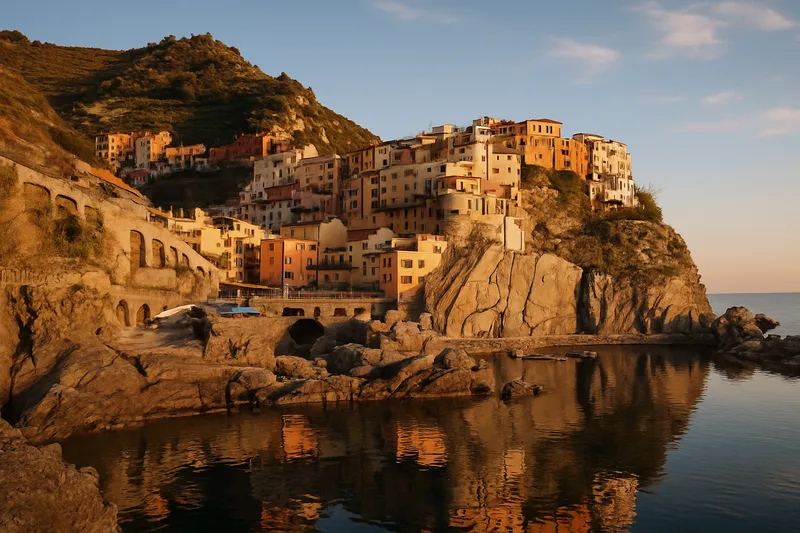
Each of the five villages has a distinct personality, and picking where to base yourself changes your whole trip. Don't assume they're interchangeable — Monterosso and Corniglia, for instance, have almost nothing in common beyond the train line.
Monterosso has the only real beach, Corniglia the fewest crowds, and Manarola the most photographed viewpoint.
Five villages of Cinque Terre compared: beaches, crowds, and best fit
| Village | Beach | Crowd Level | Best For | Train from La Spezia (min) |
|---|---|---|---|---|
| Monterosso al Mare | Sand beach | High (peak season) | Families, swimming | approx. 20 |
| Vernazza | Small pebble cove | Very high | Photos, harbor views | approx. 15 |
| Corniglia | None | Low | Quiet, hiking | approx. 12 |
| Manarola | Rocks only | High | Views, wine tasting | approx. 8 |
| Riomaggiore | None | High | Budget stays, nightlife | approx. 5 |
Figures as of 2025; train times approximate and vary by service type (regional vs. express).
Monterosso is the largest of the five and the only one with a real sand beach — most of the shoreline elsewhere is rock. It has two distinct sections: the old town, with narrow lanes and a 13th-century church, and Fegina, the newer beach district with rows of rented umbrellas and sunbeds running about €25-35 per day for two loungers. If you're traveling with kids or want an actual swim-and-sunbathe day, this is the village to base in — the others simply don't offer comparable beach space.
Vernazza is widely photographed for good reason: its small natural harbor, ringed by pastel buildings and a stone breakwater, is arguably the most classically "Italian coastal village" scene of the five. There's a small pebble and rock beach near the harbor, plus a Genoese-era castle tower you can climb for views. It gets busy — this is the village most day-trippers head to first — so early morning or after 6 p.m. is when it actually feels livable.
Corniglia is the outlier: the only village not directly on the water, perched about 100 meters up on a rocky promontory. Reaching it from the train station means climbing the Lardarina, a staircase of 33 switchback flights (roughly 365 steps), or catching a shuttle bus. That barrier keeps crowds noticeably thinner here. It's the quietest of the five, with fewer restaurants and no real beach, which makes it a good choice if you want a slower pace and don't mind the climb.
Manarola's stacked, multicolored houses above the harbor make it the most-photographed village, especially at sunset from the rocks near the marina. There's no sand beach, but locals and visitors swim off the rocks in summer. The village is also the heart of the region's Sciacchetrà wine production — terraced vineyards climb the slopes directly behind the houses, and several small wineries offer tastings for around €15-20 per person.
Riomaggiore, closest to La Spezia, functions as the unofficial gateway to Cinque Terre for many visitors and has the most strong selection of hostels and budget guesthouses. Its tall, narrow houses in ochre and red climb steeply from a small marina where fishing boats still pull up on the concrete ramp. It connects to Manarola via the Via dell'Amore, the famous cliffside walkway — though it's been closed for repairs multiple times over the past decade, so check current status before counting on it.
The trail network is the real draw for a lot of visitors, and it's more demanding than the postcard images suggest. The main coastal path, Sentiero Azzurro (Trail #2), runs the full length between all five villages, but sections vary wildly in difficulty and are sometimes closed after landslides — a recurring issue on this stretch of coast given the steep, loose terrain.
The Via dell'Amore between Riomaggiore and Manarola is flat and paved, taking about 20 minutes — it's the easiest segment and the only one realistically suitable for anyone with mobility concerns. Manarola to Corniglia takes roughly 60-90 minutes over uneven terrain. Corniglia to Vernazza is harder still, about 90 minutes to 2 hours with real elevation gain. The toughest segment, Vernazza to Monterosso, takes 2-2.5 hours with steep climbs and rough footing — expect proper hiking shoes, not sandals. A cumulative hike of all four connecting segments takes a fit walker around 5-7 hours, not counting village stops.
If hiking the whole network in one day sounds miserable — and for a lot of people it is, especially in summer heat — the regional train covers all five villages in about 15-20 minutes total travel time, with a Cinque Terre Treno Card (around €18.20 for one day, unlimited rides plus some trail access) making it easy to hop between villages. Seasonal ferries run from Monterosso through Vernazza, Manarola, and Riomaggiore in warmer months, offering coastal views the train can't, though they skip Corniglia, which has no harbor.
Visiting Cinque Terre well means deciding early whether you're day-tripping from La Spezia or Levanto, or staying inside the park itself. I'd push most people toward staying at least one night in the villages — the difference between Vernazza at 11 a.m. and Vernazza at 7 p.m. is night and day.
Hotels inside the five villages are limited and mostly small, family-run affairs — think 10-20 rooms, no elevators, and steep stairs to reach them. Expect to pay €120-220 a night for a double room in peak season, more in Vernazza and Manarola where demand outstrips supply. Riomaggiore and Monterosso have the most budget options, including hostels from around €35-45 per bed. For dining, anchovies (Monterosso is the anchovy capital), pesto, and Sciacchetrà dessert wine show up on nearly every menu — a sit-down seafood dinner with wine runs roughly €35-50 per person. Levanto and La Spezia, just outside the park, are worth considering as cheaper bases with frequent train connections.
If you only have one day, catch an early train to Riomaggiore, walk the Via dell'Amore to Manarola for lunch, train to Corniglia for the climb and views, then finish in Vernazza or Monterosso for the afternoon. Trying to properly see all five villages plus hike major trail sections in a single day is unrealistic — pick either heavy hiking or thorough village time, not both.
Timing shapes this trip more than almost anywhere else in Italy, given how small and trail-dependent the villages are.
Late April through June, and September into early October, are the sweet spots — warm enough to swim, trails open, crowds manageable. July and August bring intense heat, packed trains, and trail congestion that turns a scenic walk into a slow shuffle behind fifty other people. Winter (November to March) is quiet and cheap, but many restaurants and guesthouses close, ferries stop running, and some trail sections shut due to weather. Compare this to Lake Como, which stays more comfortable in shoulder season because its towns aren't as trail-dependent, or Portofino, which is walkable year-round without the elevation challenges Corniglia and Vernazza present.
A realistic daily budget per person runs €80-150: €40-70 for a hostel or budget hotel bed, €25-35 for meals, and €10-20 for transport and trail fees. Add wine tastings, ferry rides, or upgraded hotels and that climbs quickly toward €200+ a day — comparable to Santa Margherita Ligure but noticeably less than a stay in Portofino, where a simple dinner can easily hit €60-80 per person. Book accommodation 2-3 months ahead for summer dates; the total bed count across all five villages is small relative to demand.
The five villages of Cinque Terre are Monterosso al Mare, Vernazza, Corniglia, Manarola, and Riomaggiore, strung along the Liguria coast in northwest Italy near La Spezia. They're connected by a single regional train line, coastal hiking trails, and, in summer, ferries. All five are protected within the Cinque Terre National Park and share UNESCO World Heritage status granted in 1997.
Monterosso al Mare, without question — it's the only village with a genuine sand beach, split between the free public section and paid umbrella areas running €25-35 a day for two loungers. The other four villages have rocky shorelines or no real beach at all, so if beach time matters to your trip, base yourself in Monterosso.
Hiking the full Sentiero Azzurro trail between all four connecting segments takes roughly 5-7 hours for a reasonably fit walker, not including stops in each village. The easiest stretch, Riomaggiore to Manarola via the Via dell'Amore, takes about 20 minutes; the hardest, Vernazza to Monterosso, takes 2-2.5 hours with steep climbs. Check trail status before you go — landslide closures are common.
There's no single right answer — it depends on what you want. Vernazza is the most visually striking with its natural harbor, Manarola offers the best sunset views and wine, and Corniglia gives you the quietest, least touristy experience since it requires a steep climb from the train station. Monterosso wins if you want a beach and more amenities.
Late April through June or September through early October offer the best balance of warm weather, open trails, and manageable crowds. Avoid July and August unless you don't mind packed trains and slow-moving trail traffic. Winter is quiet and cheap but many businesses close and some trails and ferries shut down entirely.
Book Via dell'Amore tickets for Cinque Terre's famous coastal walk. Timed-entry pricing, official booking steps, opening hours, and what to expect.
9 min read · 7 Oct 2026
Corniglia things to do, from the 382-step Lardarina climb to hiking and swimming spots. An honest look at whether this hilltop village is worth visiting.
9 min read · 7 Oct 2026
Compare all 5 Cinque Terre villages by price, crowds, accessibility & trails. Find your perfect base for families, couples, solos & seniors.
9 min read · 7 Oct 2026
Monterosso al Mare things to do: beaches, boat tours, lemon-grove walks and diving. Family-friendly and senior-accessible ideas in Cinque Terre.
10 min read · 7 Oct 2026
Discover Vernazzo things to do: book boat trips, visit Castello Doria, snorkel tours & more. Tips on tickets, best times & independent vs guided visits.
9 min read · 7 Oct 2026
Discover Manarola things to do: wine tasting tours, vineyard walks, the Nessun Dorma viewpoint, boat tours, and hiking. Plan your visit with practical tips.
9 min read · 7 Oct 2026
Riomaggiore things to do: explore the village, hike Via dell'Amore, kayak the coast, and visit the harbor. Tickets, timing, and booking tips.
8 min read · 7 Oct 2026
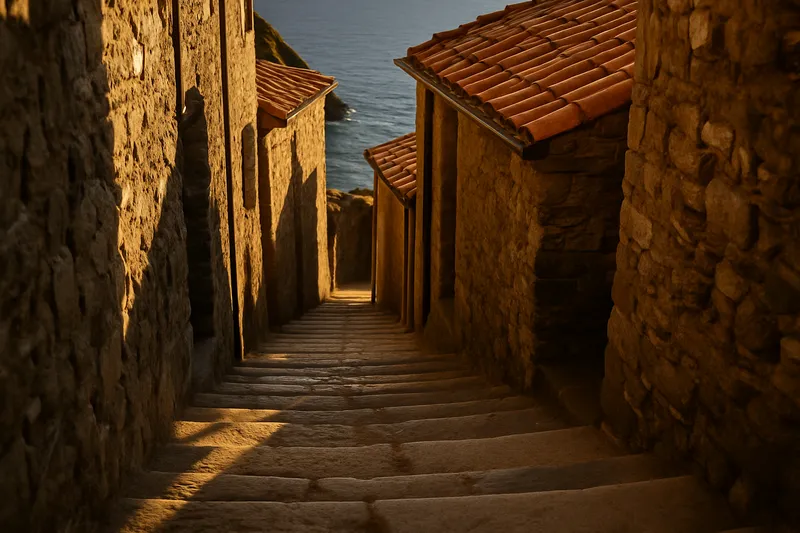
Explore Cinque Terre hiking trails between villages: Sentiero Azzurro difficulty, distances, closures, permit costs, and route tips for every fitness level.
9 min read · 1 Oct 2026