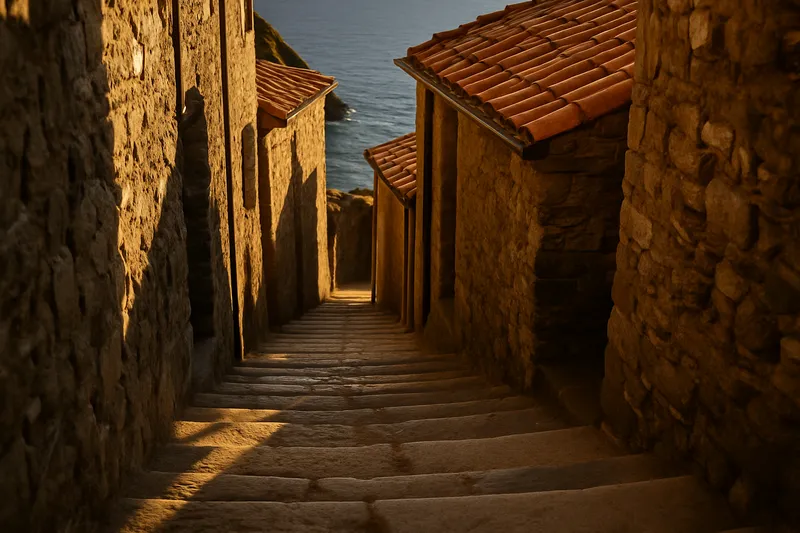
Explore Cinque Terre hiking trails between villages: Sentiero Azzurro difficulty, distances, closures, permit costs, and route tips for every fitness level.
Overview of Cinque Terre Hiking Trails
Cinque Terre hiking trails between villages link five towns strung along a stretch of the Ligurian coast so steep that roads arrived late and railways still do most of the heavy lifting. Riomaggiore, Manarola, Corniglia, Vernazza, and Monterosso al Mare sit inside Parco Nazionale delle Cinque Terre, and the park manages a network of numbered paths that climb from sea level into terraced vineyards and back down again. The famous one is the Sentiero Azzurro, or Blue Trail, which traces the coastline itself. But it's not the only option, and it's rarely the fastest.
I'd argue the park's own trail map undersells how much elevation gain is packed into short horizontal distances. A 2-kilometer segment can mean 300 meters of climbing on uneven stone steps, which surprises people expecting a flat seaside stroll. If you want genuinely level walking, you won't find much of it here — the terrain simply doesn't allow it.
Beyond the Blue Trail, higher-elevation paths (numbered 1, 3, 7, and others) connect the villages through the hills, usually with fewer crowds and better views, at the cost of more climbing and longer times. These upper routes rarely close, which matters given how often the coastal path itself is affected by landslides.
Trail network and village connections
The core village-to-village hiking routes run in a rough line: Monterosso–Vernazza–Corniglia–Manarola–Riomaggiore, covering roughly 12 kilometers end to end along the coast. Inland alternatives, like the high route (Sentiero Rosso and connecting trails), loop above all five villages and link to hill towns such as Volastra. Signage uses red-and-white CAI markers plus numbers, and most junctions have wooden signposts with estimated times rather than distances — useful, since times account for the climbing that plain distance figures hide.
Paid vs free trail options
Certain sections of the Sentiero Azzurro require a paid Cinque Terre Trekking Card, currently around €7.50 per person per day, which funds trail maintenance and includes insurance. The Cinque Terre Card (about €7.50 for trails only, or roughly €16-18 combined with unlimited train travel for the day) covers those same paid segments. Inland trails through the national park are generally free, which is one reason I point budget-conscious hikers toward the high routes rather than assuming the coastal path is a free public trail — it isn't, where it's open.
The Sentiero Azzurro: Blue Trail Guide
The Sentiero Azzurro was designed as the low-elevation coastal connector between all five villages, and on paper it's the most scenic short hike in Liguria. In practice, landslide damage has closed long stretches for years at a time, and the trail's reputation as an easy afternoon walk between all five towns hasn't matched reality since a major 2011 flood damaged several sections. Always verify what's actually open before building an itinerary around it.
Where it is open, the path delivers on the reputation: vineyard terraces held up by dry-stone walls, close-up views of pastel houses stacked above small harbors, and enough sea air to make you forget your calves are burning. It's also narrow in places — single-file narrow, with drops to one side — which is worth knowing if you're hiking with kids or anyone uneasy with exposure.
Route characteristics and highlights
The trail alternates between paved sections near villages and rougher stone or dirt paths further out, with occasional metal handrails on exposed curves. The Riomaggiore–Manarola leg, nicknamed Via dell'Amore, is the gentlest and most paved stretch of the entire Blue Trail — practically a promenade by Cinque Terre standards. Further north, the Vernazza–Monterosso leg gets genuinely rugged, with loose gravel, tree roots, and staircases that will test tired legs on a hot afternoon.
Time estimates and elevation
Budget roughly 20-30 minutes for Riomaggiore to Manarola when open, 1.5-2 hours for Manarola to Corniglia, about 1.5 hours for Corniglia to Vernazza, and 2-2.5 hours for Vernazza to Monterosso. Elevation gain varies sharply — the Via dell'Amore is nearly flat, while the Corniglia to Vernazza stretch climbs past 200 meters. Add 30% to posted times if you're stopping for photos every five minutes, which, realistically, you will.
Difficulty Levels and Accessibility
Sentiero Azzurro difficulty isn't uniform, and that inconsistency trips people up more than any single steep section does. Some guides label the whole Blue Trail "easy," which is misleading once you're past Manarola. A more honest breakdown: easy near village centers, moderate on most open coastal stretches, and strenuous on the high inland routes that substitute for closed coastal segments.
Corniglia adds its own wrinkle — the village sits on a bluff, reached from the train station by a 377-step staircase (Lardarina) or a shuttle bus. Hikers arriving from Manarola on foot get to skip that particular gauntlet, but anyone doing a partial hike plus train combination should factor it in.
Beginner-friendly routes
For hiking Cinque Terre for beginners, the Via dell'Amore between Riomaggiore and Manarola is the obvious starting point when open — short, mostly paved, and manageable in sneakers rather than hiking boots. It's also the most crowded, so go early, ideally before 9 a.m., to get photos without forty other people in the frame. If that segment is closed, the alternative is simply taking the train and treating one longer inland trail as your single hiking effort for the day rather than stringing together all five villages.
Challenging terrain sections
The high route above Vernazza and Monterosso, along with Sentiero 7A and similar numbered paths, involves narrow dirt tracks, loose scree, and drop-offs without railings in spots. These aren't technical climbs, but they demand proper footwear — trail runners or hiking shoes, not sandals — and they're a poor choice in rain, when clay-based sections turn slick within minutes. I wouldn't recommend these to anyone hiking in flip-flops, which, remarkably, people still attempt.
Village-to-Village Routes and Distances
Planning village-to-village hiking routes means accepting that you'll likely mix walking with the regional train, since the full coastal chain is rarely open simultaneously. The train connects all five villages in about 25-30 minutes total end to end, and a single Cinque Terre Card with train access lets you hop on whenever legs or weather demand it — a practical safety net that purists sometimes resist unnecessarily.
The Riomaggiore-Manarola leg is by far the easiest hike between villages, while Corniglia to Vernazza and Vernazza to Monterosso demand real fitness and sturdy footwear.
Cinque Terre hiking trails between villages compared by distance, time, and difficulty
| Route | Distance (km) | Time (approx.) | Difficulty | Trail fee required |
|---|---|---|---|---|
| Riomaggiore–Manarola (Via dell'Amore) | approx. 1 | 20-30 min | Easy | Yes, when open |
| Manarola–Corniglia | approx. 3 | 1.5-2 hrs | Moderate | Yes |
| Corniglia–Vernazza | approx. 4 | 1.5 hrs | Moderate-strenuous | Yes |
| Vernazza–Monterosso | approx. 3.5 | 2-2.5 hrs | Strenuous | Yes |
| High route (inland, above all villages) | approx. 12-13 total | 6-7 hrs full length | Strenuous | No |
Figures as of 2026; coastal segments face frequent closures after storms, always confirm status with the Parco Nazionale delle Cinque Terre before hiking.
Riomaggiore to Manarola
This roughly 1-kilometer stretch, the Via dell'Amore, is the flattest and most accessible section of the entire network, with a paved surface suitable for anyone reasonably mobile — though not wheelchair or stroller friendly due to some stairs and narrow points. It has faced repeated closures for rockfall repair, including extended work through recent years, and reopening comes with restricted hours and the paid trail fee. Check the official park site the day before, since status changes without much public notice.
Manarola to Corniglia to Monterosso
Manarola to Corniglia runs about 3 kilometers through vineyard terraces, taking 1.5-2 hours with moderate climbing — this is where the "easy Blue Trail" reputation starts to crack. Corniglia to Vernazza (roughly 4 kilometers) and Vernazza to Monterosso (about 3.5 kilometers) are the most physically demanding legs, combining heat exposure, uneven steps, and real elevation change. Doing all three in one day is roughly 6-7 hours of hiking including breaks — ambitious for beginners, comfortable for regular hikers.
Trail Conditions, Closures, and Costs
Trail closures aren't occasional inconveniences here — they're a structural feature of hiking Cinque Terre. Landslides, erosion, and heavy rain regularly shut sections of the Sentiero Azzurro, sometimes for months, sometimes for years. The Vernazza-Monterosso and Corniglia-Vernazza legs have both seen long-term closures in the past decade. Don't book a trip assuming a specific route will be walkable; check the Parco Nazionale delle Cinque Terre website or the park's official app within 24-48 hours of your hike.
Current status and seasonal closures
Winter (November through March) brings more frequent closures due to rain and reduced maintenance staffing, while summer sees the most open trail mileage but also crowding and heat that make afternoon hikes uncomfortable. Shoulder season — April, May, September, early October — generally offers the best combination of open trails, manageable temperatures, and thinner crowds. Always have a fallback: an inland alternate route or a train ticket in your pocket.
National Park pass requirements
The Cinque Terre Trekking Card (around €7.50/day) is required for the paid coastal segments; the combined Cinque Terre Card with train (roughly €16-18/day) adds unlimited regional train rides between villages, which is worth it the moment you plan to bail on a hike partway through. Multi-day versions exist too. Inland numbered trails don't require a card, so if you're avoiding fees entirely, the high route is your best bet — just expect more climbing for the discount.
Hiking Tips and Best Practices
Good footwear matters more here than on most "coastal walk" itineraries elsewhere in Italy. Compare it to a flat stroll along the Amalfi Coast's Path of the Gods and you'll find Cinque Terre's steps and loose gravel considerably rougher underfoot in sections — this isn't a boardwalk. Start early, carry more water than seems necessary (at least 1 liter per 2 hours in summer), and don't expect much shade on exposed clifftop stretches.
Physical preparation and pacing
If your regular exercise is limited, don't attempt all five villages in one day. Break it into two days, pairing an easier segment (Riomaggiore-Manarola) with a rest afternoon in a town like Vernazza, which has a genuine sand-and-pebble beach worth lingering on. Trekking poles help on the steeper descents into Corniglia and Monterosso, where knees take more punishment than most people expect from a "walking holiday."
Navigation and safety essentials
Download an offline map (the park's official app or a tool like Maps.me) before you start, since mobile signal drops in the valleys between villages. Wear real hiking shoes with grip, not city sneakers — the stone steps get polished smooth by decades of foot traffic and turn slippery when damp. Tell someone your planned route and expected return time; rescue access on some inland trails is limited, and a twisted ankle far from a village means a long, slow walk out.
Frequently asked questions
What is the easiest trail between Cinque Terre villages?
The Via dell'Amore between Riomaggiore and Manarola is the easiest, at roughly 1 kilometer on mostly paved, low-gradient path taking 20-30 minutes. It's suitable for casual walkers in normal shoes, though it has faced repeated closures for repair work, so confirm it's open before planning your day around it.
How long does it take to hike between all five villages?
Walking the full Sentiero Azzurro end to end, when every section is open, takes roughly 6-7 hours including rest stops, covering about 12 kilometers with significant elevation change. Most people split this across two days or substitute train rides for the toughest legs rather than attempting it all at once.
Is it currently possible to walk between all villages?
Not always — sections of the Sentiero Azzurro close periodically due to landslides and erosion, sometimes for extended periods. Check the official Parco Nazionale delle Cinque Terre website or app 24-48 hours before your visit, and have inland trail alternatives or train tickets as backup.
Do I need to pay to hike between villages?
Paid coastal segments require a Cinque Terre Trekking Card (around €7.50/day) or the combined Cinque Terre Card with train access (roughly €16-18/day). Inland numbered trails through the national park are typically free, so budget hikers can skip fees by choosing the high route instead.
What is the most beautiful hiking trail in Cinque Terre?
Most hikers rate the Corniglia-to-Vernazza stretch as the most rewarding visually, with sweeping views over terraced vineyards and the village perched above the sea — though it's also one of the more strenuous legs. The high inland route above Monterosso offers comparable panoramas with fewer crowds, at the cost of more climbing.