Corniglia things to do, from the 382-step Lardarina climb to hiking and swimming spots. An honest look at whether this hilltop village is worth visiting.
What Makes Corniglia Unique
Corniglia is the odd one out among the five villages. It's the only one of the Cinque Terre that doesn't sit directly on the water — it's perched roughly 100 meters above the Ligurian Sea, on a small plateau surrounded by terraced vineyards. That one geographic fact shapes almost everything about visiting it: no harbor, no waterfront promenade, no boats pulling up to a dock. What it has instead is a tight knot of medieval streets, a single main lane called Via Fieschi lined with small shops and trattorias, and views that stretch along the coast toward Vernazza and Manarola without a single tour bus parking lot in sight.
That isolation is deliberate, in a sense — the train station sits at sea level, and from there you either climb the stairs or wait for the shuttle. Most day-trippers doing all five villages in one go decide it's too much friction and bypass Corniglia, or glance at it from the train window. That's their loss and your opportunity. Fewer crowds mean you can actually hear the village: dishes clinking in a kitchen, someone's grandmother calling down from a window, no amplified tour-guide commentary competing with church bells.
Why it's different from other Cinque Terre villages
Monterosso has the sandy beach and resort feel. Vernazza has the postcard harbor everyone photographs. Manarola has the colorful cliffside houses reflected in the water. Corniglia has none of that — and that's the point. It trades waterfront drama for elevation and quiet. If you've already seen Vernazza's harbor and Manarola's famous view from the cemetery, Corniglia feels like a palate cleanser: smaller, less staged, more residential. It's also the smallest of the five by population, with a few hundred permanent residents, which means the tourist infrastructure is thinner — fewer gift shops, more actual grocery stores and bars where locals drink their morning coffee.
Who should visit Corniglia
If you're mobility-limited, traveling with a stroller, or hauling luggage between villages, Corniglia is genuinely frustrating — there's no way around the climb except the shuttle bus, and even that drops you a short walk from the center. If you're a hiker, a photographer, or someone who finds the other villages a bit too polished and crowded by midday, Corniglia is the most rewarding stop on the line. Solo travelers and couples looking for a quieter overnight base, rather than a quick photo stop, tend to like it best — the lack of a beach actually filters out a chunk of the day-trip crowd.
The Lardarina: Challenge and Reward
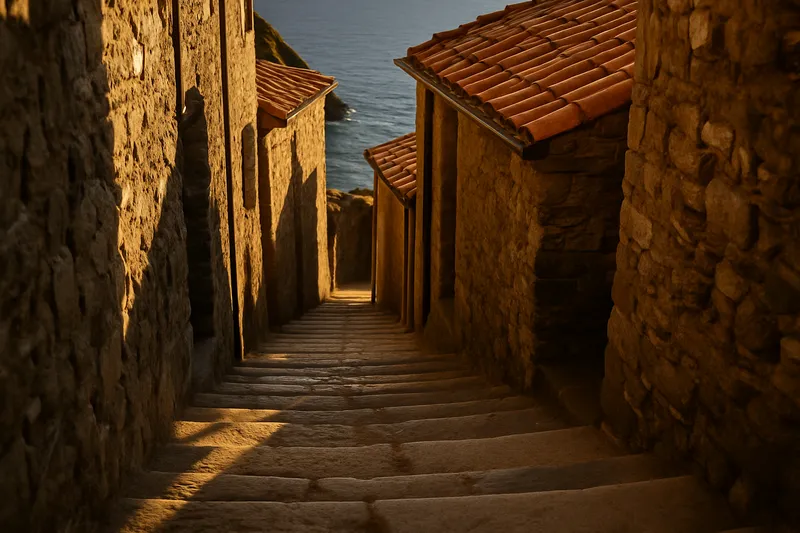
The Lardarina staircase is Corniglia's signature obstacle and its best-known feature after the view itself. It's a covered, switchbacking stone stairway of 382 steps connecting the train station at sea level to the village center above. It's been the main pedestrian route up for generations, worn smooth in places by foot traffic, and partially shaded by brick archways that at least keep direct sun off you for stretches of the climb, which matters in July and August.
Don't underestimate it because the number sounds manageable on paper. Three hundred and eighty-two steps with no flat landings to speak of is a sustained climb, not a flight of stairs at home — more comparable to walking up a 20-story building, continuously, at an angle, often in heat and humidity coming off the sea.
Difficulty by fitness level and time needed
For a reasonably fit adult, expect 10 to 15 minutes of steady climbing, with a couple of short pauses for breath. If you're out of shape, traveling with kids, or visiting in peak summer heat, budget 20 to 25 minutes and plan on stopping several times — there's no shame in it, and the shaded sections offer natural rest points. Older travelers or anyone with joint issues should treat this as a genuine decision point, not a minor inconvenience: the steps are uneven in places, there's no handrail for long stretches, and there's no bail-out halfway. Carrying luggage up is a bad idea; day bags are fine.
Alternative access routes
A local shuttle bus connects the train station to the village center for a small fare (typically around €1.50-2.50, payable on board or via local transport ticket), running at intervals of roughly 20-30 minutes depending on season. It's the obvious alternative if the stairs are off the table, though it does mean waiting, and service can be sparse outside peak season. There's no funicular here, unlike some assumptions travelers carry over from Manarola or Vernazza setups — the shuttle is genuinely the only non-stair option.
How to Visit: Independent vs. Guided Tours
Corniglia sits on the Cinque Terre train line between Vernazza and Manarola, so getting there independently is straightforward: trains run frequently between the villages, typically every 15-30 minutes depending on time of day and season, and the ride from Monterosso or La Spezia takes well under 20 minutes. A Cinque Terre Trekking Card or the combined train-and-trail pass covers both the hiking trails and local trains, and is worth comparing against single tickets if you're visiting more than two villages in a day.
Corniglia requires more physical effort to reach than its neighbors, but rewards visitors with fewer crowds and no entrance fee pressure.
Corniglia things to do: comparing access, time, and effort by village
| Village | Access from station | Climb/effort | Beach access | Best for |
|---|---|---|---|---|
| Corniglia | Stairs (382 steps) or shuttle | High | None (cliff-top) | Quiet exploring, views |
| Vernazza | Flat walk from station | Low | Small pebble harbor area | Photos, harbor atmosphere |
| Manarola | Flat walk, short rise | Low-moderate | Rocky swimming area | Sunset views, short visits |
| Monterosso | Flat, beachfront | Low | Sandy beach | Families, beach time |
| Riomaggiore | Flat walk, some stairs | Low-moderate | Small rocky cove | Harbor views, nightlife |
Typical conditions; shuttle schedules and crowd levels vary by season, so check locally when you arrive.
Self-guided visit logistics
Most visitors treat Corniglia as a 2-3 hour stop within a broader Cinque Terre day, pairing it with Manarola or Vernazza. Arrive by train, climb the Lardarina (or catch the shuttle), explore the village center, grab lunch, then either hike or train onward. The village itself can be covered on foot in under an hour since it's essentially one main street with a few side lanes — the real time investment is the climb and lingering over food or the view, not covering ground.
Guided tour options and what's included
Guided Cinque Terre tours — bookable through platforms like GetYourGuide — typically bundle Corniglia with two or three other villages, often including transport, a local guide, and sometimes a boat leg between villages. These suit first-time visitors who want context (local history, wine terrace explanations) without planning logistics themselves, and they take the stress out of train timing. The trade-off: you're on someone else's schedule, and Corniglia's small size means a large group can feel cramped on its narrow main street. If you'd rather set your own pace, compare current guided tour options and prices before you book, since inclusions and village combinations vary by operator.
Things to Do in Corniglia
Once you're up the stairs, Corniglia things to do fall into three categories: trail walking, water access via a side trail, and simply wandering a village small enough to feel knowable in an afternoon. None of it is flashy. All of it rewards slowing down.
Hiking trails and viewpoints
Corniglia sits on the Sentiero Azzurro, the Blue Trail that links all five villages, though sections of this coastal path have had periodic closures over the years due to landslide damage — always check current trail status before setting out. The stretch toward Vernazza is one of the more scenic and manageable segments when open, taking roughly 1.5 to 2 hours at a moderate pace with real elevation change. Higher inland trails connect Corniglia to Volastra and the sanctuary above Manarola, offering longer routes (3+ hours) for travelers who want vineyard views without the coastal crowds. Bring proper shoes — sandals on these paths are a bad idea, and I'd actively discourage it.
Swimming, snorkeling, and water activities
Corniglia has no beach of its own, but Guvano Beach lies below it, reachable via a steep path and an old, unlit tunnel that's been informally used for decades (and officially discouraged at times due to safety concerns). It's a quieter, partly unofficial swimming spot favored by locals and travelers wanting space from the Monterosso crowds — but the access route is genuinely rough, and I wouldn't recommend it for families with young kids or anyone unsteady on uneven terrain. Water is clear enough for casual snorkeling near the rocks on calm days.
Village exploration and local food
Via Fieschi is where you'll spend most of your time — small focaccerias, anchovy shops (Corniglia and the surrounding coast are known for Ligurian anchovies), and a handful of family-run trattorias serving trofie al pesto and fresh seafood. Prices run noticeably lower than in Vernazza or Manarola, where tourist volume pushes menu prices up. The village's small oratory and the views from the edge of the plateau, looking down toward the sea, are worth 20 minutes alone, no hiking required.
Best Time to Visit and Practical Tips
Corniglia's lack of a beach actually works in your favor crowd-wise. It never fills up the way Monterosso or Manarola do at midday in July and August, but the Lardarina still gets uncomfortable in direct heat — climbing it at midday in summer is objectively unpleasant, even with the covered sections.
Seasonal considerations and crowds
Late April to June and September to early October offer the best balance: mild temperatures for the climb and trails, and crowd levels that let you actually enjoy the main street without shuffling behind tour groups. Peak summer (July-August) brings heat that makes the stairs genuinely taxing and trail sections more exposed. Winter is quiet but some trattorias and shops close, and the Guvano Beach path is best avoided after heavy rain due to erosion risk.
Accessibility and safety information
Corniglia is not wheelchair accessible and is a poor fit for strollers — the shuttle bus is the only non-stair option, and even then, the village center has narrow, sometimes stepped lanes. If you have a heart condition, severe asthma, or significant mobility limitations, treat the 382-step Lardarina staircase difficulty question seriously rather than as a minor challenge; the shuttle exists precisely for this reason, and there's no practical shame in using it over the stairs.
Frequently asked questions
Is Corniglia worth visiting?
Yes, for most travelers who aren't severely limited physically. It offers the quietest, most residential village experience in Cinque Terre, with lower prices than Vernazza or Manarola and real trail access. If your priority is a sandy beach or minimal walking, you'll get more value from Monterosso.
How difficult is the 382-step Lardarina climb?
Moderate to challenging. Fit adults manage it in 10-15 minutes with brief rests; less fit visitors or those climbing in summer heat should plan for 20-25 minutes. Steps are uneven, handrails are inconsistent, and there's no flat resting point until near the top.
What are the best things to do in Corniglia?
Walk Via Fieschi for local food and anchovy shops, take the Sentiero Azzurro toward Vernazza when open, and visit the plateau edge for sea views. The inland trail toward Volastra suits travelers wanting longer hikes away from the coast.
Can you swim in Corniglia?
Not directly from the village, since it sits on a cliff with no beach. Guvano Beach below is accessible via a steep path and an old tunnel, but access conditions change and the route is unsuitable for young children or anyone with mobility concerns.
What's the best time to visit Corniglia?
Late spring (May-June) or early autumn (September) give you manageable temperatures for the climb and trails, plus thinner crowds than peak summer. Avoid midday climbs in July and August unless you're prepared for real heat on the stairs.